At 10:47 PM, you pick up your phone to check one thing. The weather. A message. Tomorrow’s first meeting.
At 11:16 PM, you are deep in a feed you did not plan to open.
That moment is familiar to almost everyone now, and most advice still sounds like a bootcamp speech: delete the apps, do a digital detox, stop being weak. It sounds clean. It also falls apart by Tuesday.
Most people do not need a phone free life. They need a phone life that does not eat the rest of life.
The all or nothing trap
Going cold turkey is attractive because it feels decisive. One big decision, one dramatic reset, new person by Monday.
Real life does not work that way. Your phone is your maps, calendar, camera, banking app, group chat with family, school updates, and the two factor code you need to log into work. Telling people to remove screens from modern life is like telling them to stop using electricity.
The better question is simpler: which part of your phone use helps your life, and which part leaves you tired, distracted, and weirdly empty.
Keep the useful parts. Put guardrails around the rest.
Keep the parts you actually care about
A lot of people have never separated intentional use from reflex use.
Intentional use is when you open your phone for a clear reason, do the thing, then leave.
Reflex use is when your hand reaches for your phone during every tiny gap: elevator, queue, kettle boiling, red light, bathroom mirror, five seconds before a meeting starts.
This distinction matters more than total minutes.
Thirty minutes spent messaging a close friend can make you feel more connected. Thirty minutes of feed hopping can leave you foggy and restless. Same clock time. Very different effect.
If you want one fast filter, ask this before opening an app: “What am I here to do?”
If you cannot answer in one sentence, that is usually reflex use.
Build speed bumps where you usually lose time
Most people already know their danger windows. Late night in bed. First 30 minutes after waking up. Midday slump when focus drops.
Do not redesign your whole life. Start with one window.
If late night is where your screen time explodes, set up that environment so the easy move is sleep, not scrolling:
- Charge your phone outside the bedroom.
- Keep a cheap alarm clock by the bed.
- Put a book, notebook, or Kindle on the pillow before dinner.
That third one sounds small, but it matters. People usually choose what is already within arm’s reach.
Then add speed bumps to your high drift apps:
- Remove them from the home screen.
- Turn off nonhuman notifications (news, promos, “someone liked your post”).
- Use app limits that ask for a pause before extending time.
Hard lockouts can work for a few days, but many people rebel against them fast. A short pause is often enough to break autopilot and let your frontal brain catch up.
Give your nervous system a different off switch
A lot of scrolling is not about entertainment. It is about state change.
You feel anxious, bored, lonely, or mentally fried. The phone gives instant stimulation, so your brain learns that swipe equals relief.
If you remove the swipe and keep the emotional need, your brain will hunt for the next fast fix.
That is why replacement matters.
The replacement does not need to be noble. It needs to be available.
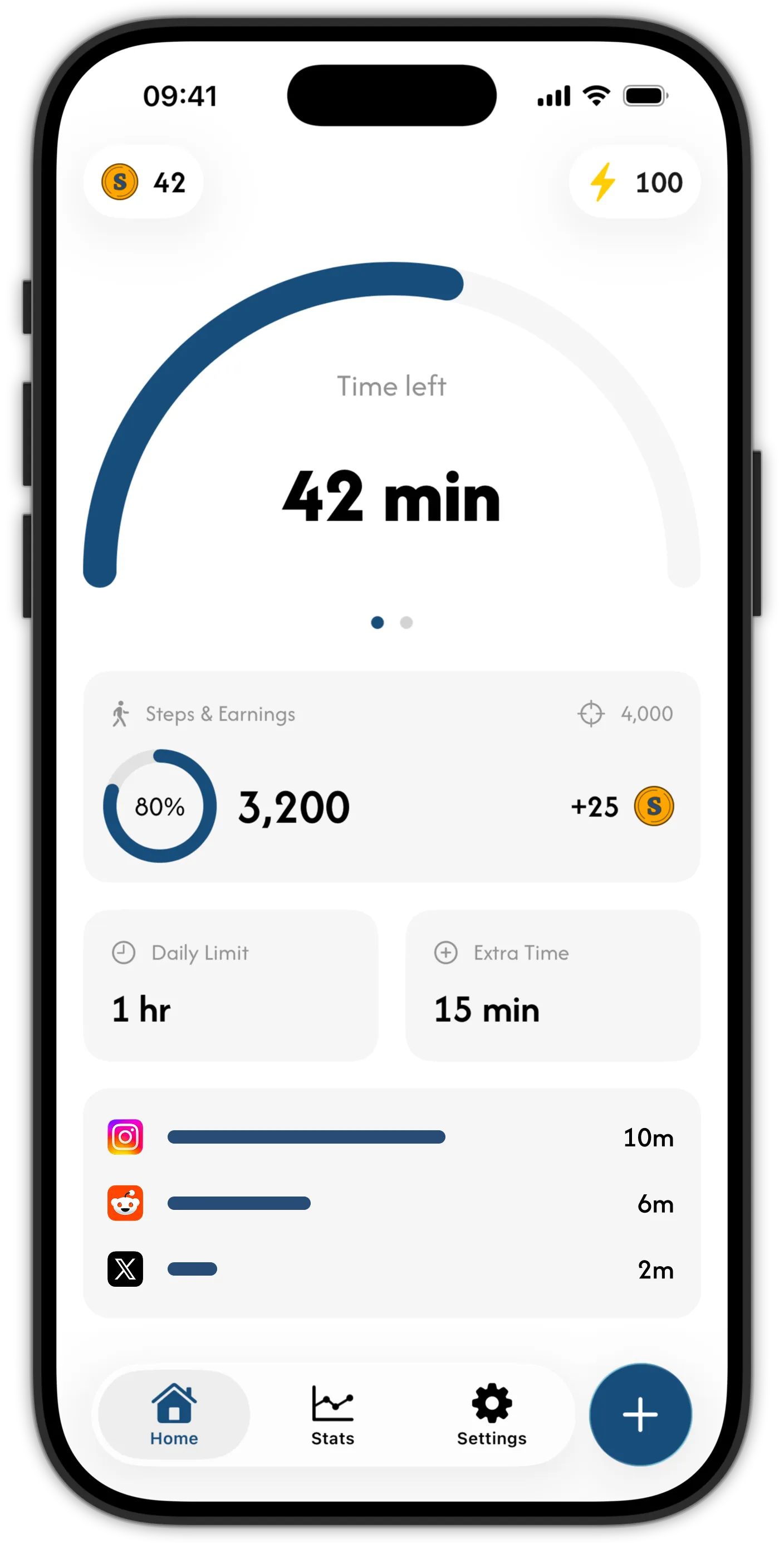
A ten minute walk works well because it shifts your body state quickly. Fresh air helps. Movement helps. Distance from the screen helps. And if you want a structured version of this, earning screen time through walking works because it turns movement into the first step instead of the afterthought.
You can also use smaller replacements:
- Make tea and stand by a window.
- Do twenty air squats.
- Step outside for one song.
- Shower before opening evening social apps.
The rule is simple: pick replacements that can start in under ten seconds.
A week that feels normal, not extreme
If your current approach is “I should just have more discipline,” try this instead for seven days.
Day 1, do not change anything. Just check where your time actually goes.
Day 2, choose one danger window and protect it.
Day 3, remove one high drift app from the home screen.
Day 4, mute non-human notifications.
Day 5, add one replacement action for urge moments.
Day 6, do a short walk before your usual evening scroll block.
Day 7, keep what helped and drop what felt fake.
This is not dramatic. That is the point.
You are not trying to become a monk with a dead battery. You are trying to build a phone routine that leaves room for sleep, focus, movement, and people you actually care about.
And once that starts happening, your screen time number often drops on its own, without a daily fight.
If you want more practical ideas in this direction, this guide on reducing screen time without deleting social media pairs well with this one.